Most AWS accounts are paying for 20% they don't use.
Find yours in a complimentary scan. No CUR setup, no sales call, nothing in your account changes. One read-only role and you see exactly where the money's going, in minutes.
Read-only access. We can't stop, start, or change anything, and we never see your data. See exactly what we can access
Monthly AWS bill · savings identified in teal
20%*median AWS savings identified
* Median savings identified across accounts scanned to date. Your result depends on your environment; the scan costs nothing either way.
Safe to connect. Fast to value.
Three steps from a read-only role to a full picture of your AWS spend.
What Sentasity can and cannot do in your account
- We cannot stop, start, resize, or delete any resource.
write access: none - We cannot read your secrets, your database contents, or your queue messages.
data reads: denied - We only read resource configuration and billing metadata: the read-only signals needed to spot unused spend and security risk.
Describe* · List* · Get*
You grant this with one CloudFormation role, and you can revoke it in one click, anytime.
You stay in control the whole time. When trust matters most, the ask is small.
Scan my account- Results in minutes
- No cost either way
- Revoke in one click
The scan is just the front door.
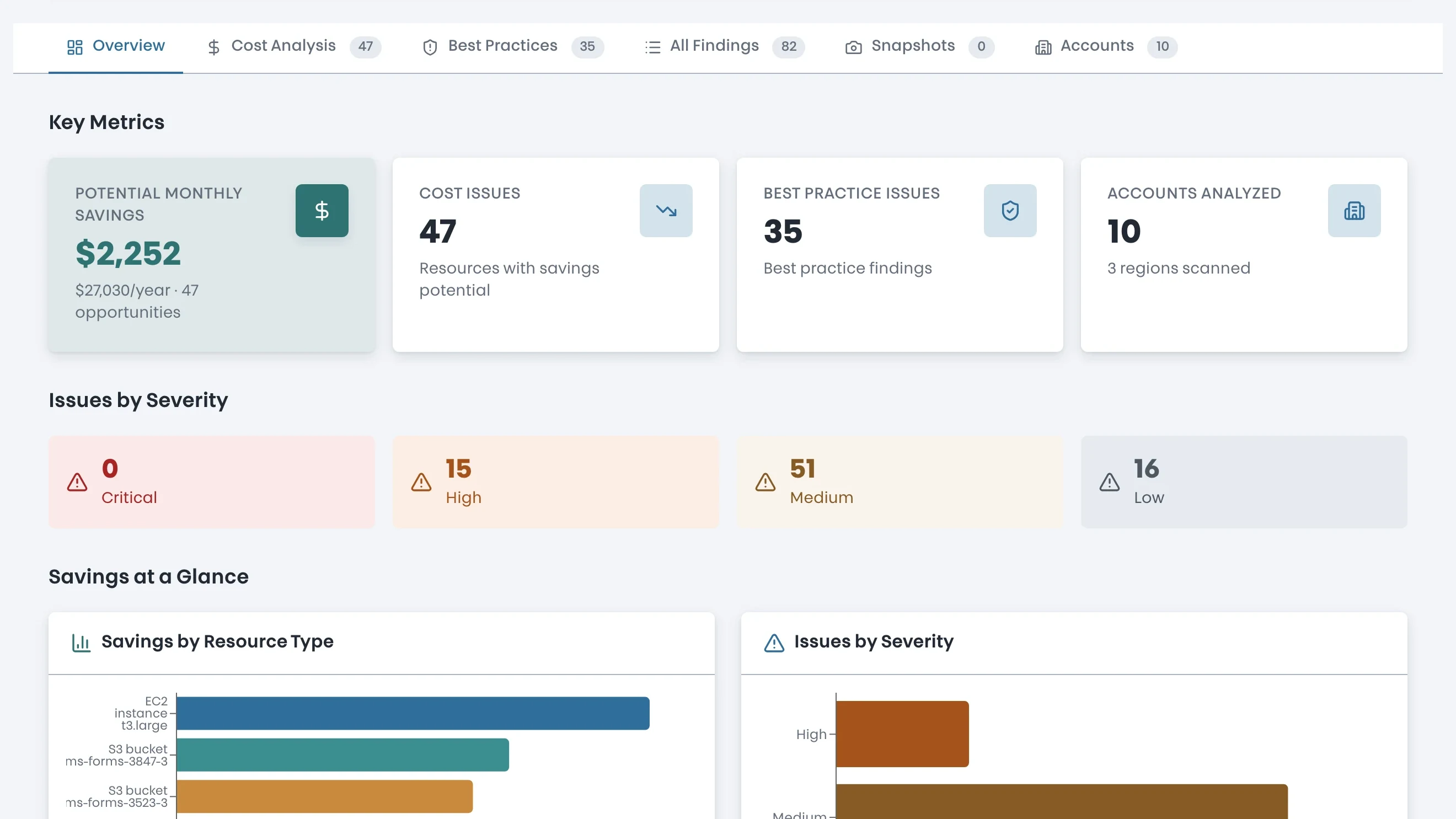
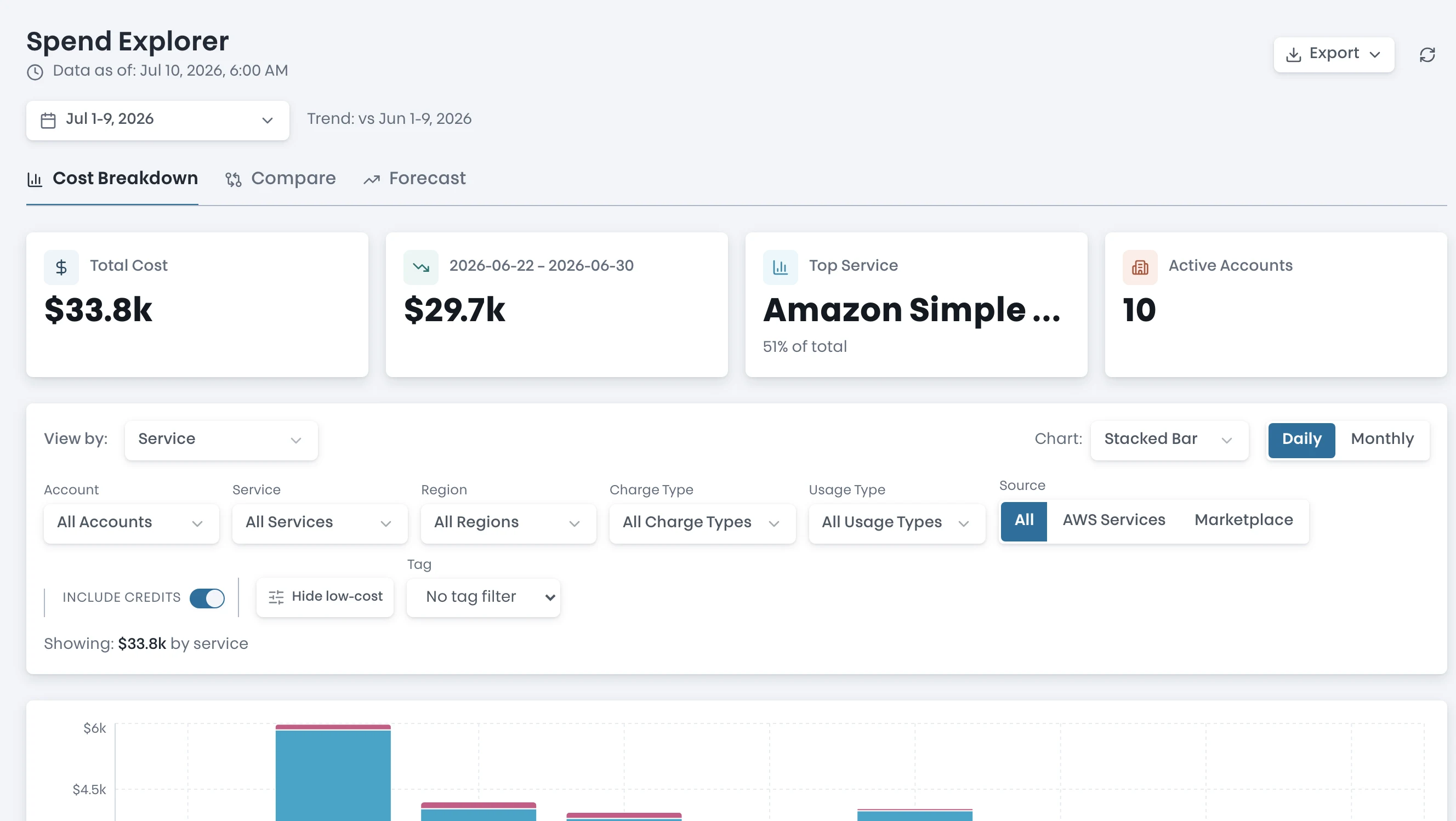
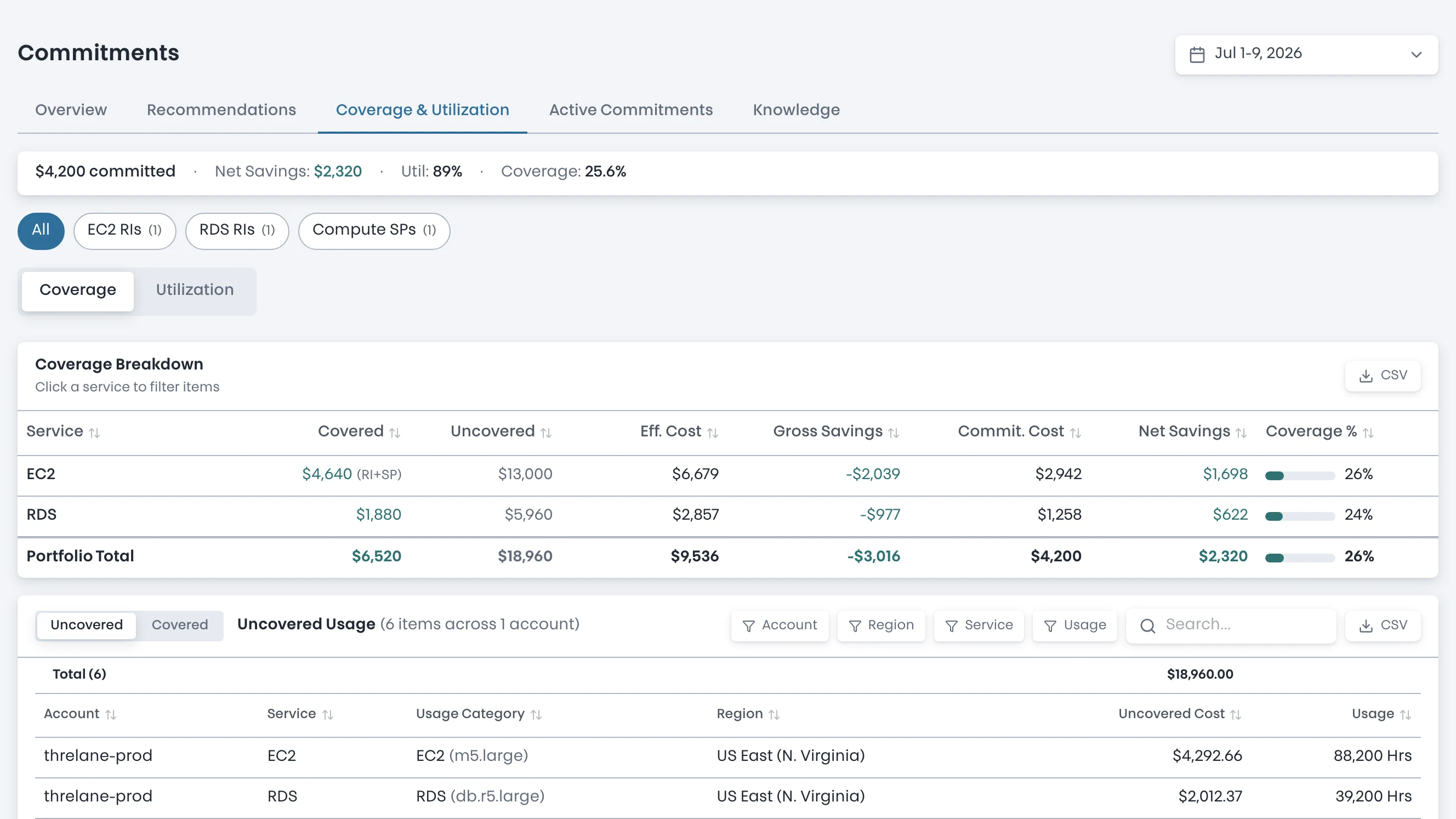
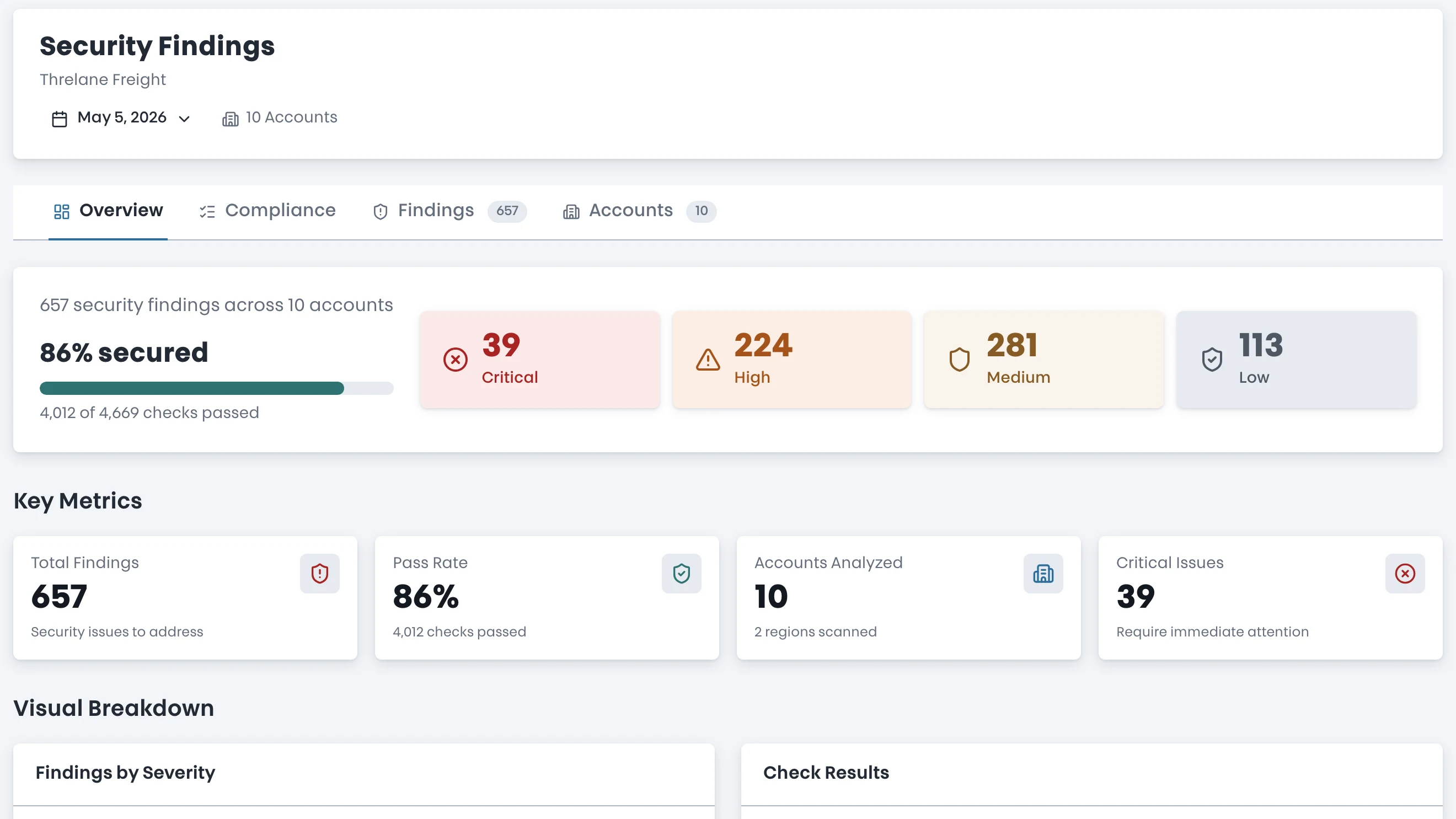
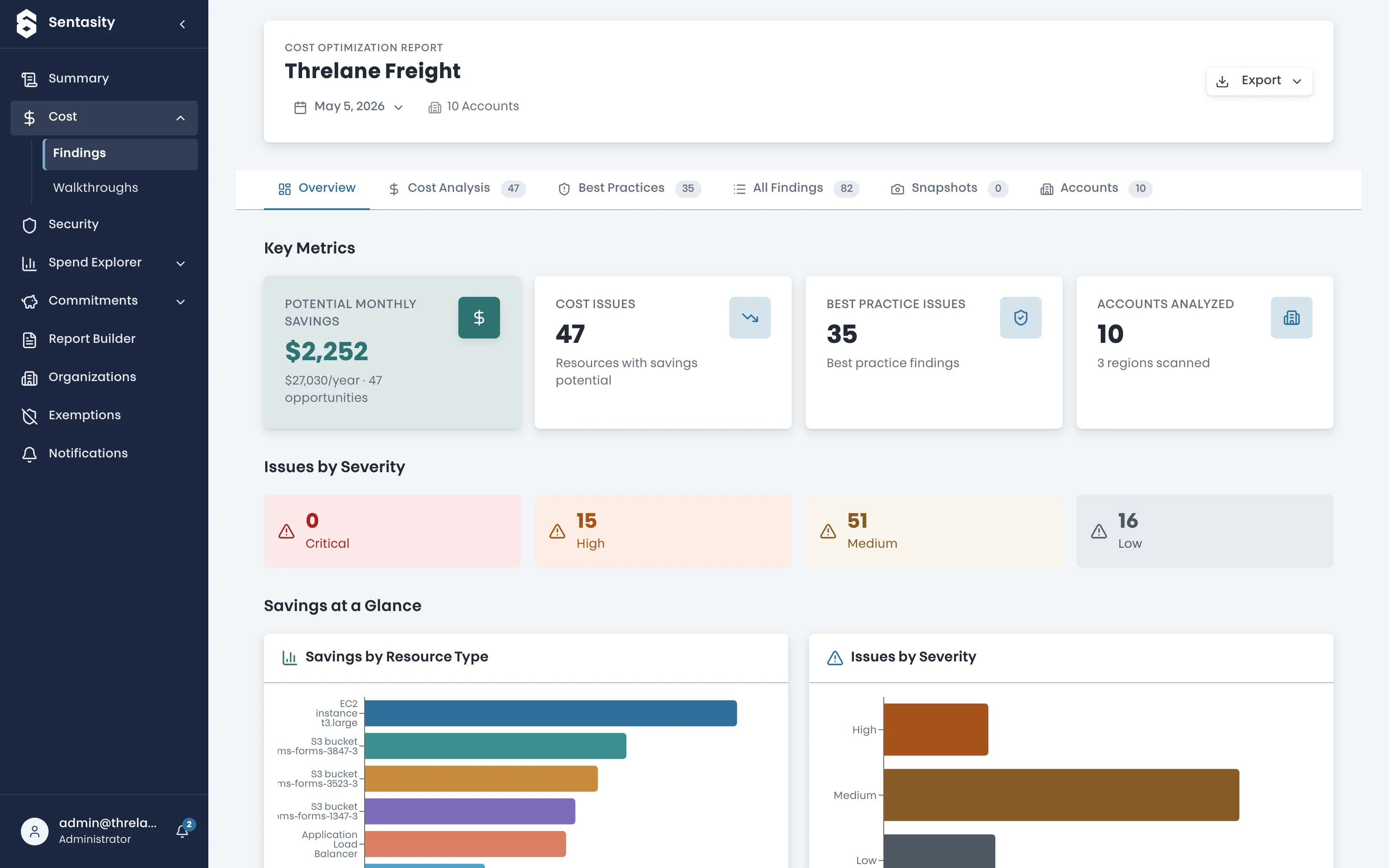
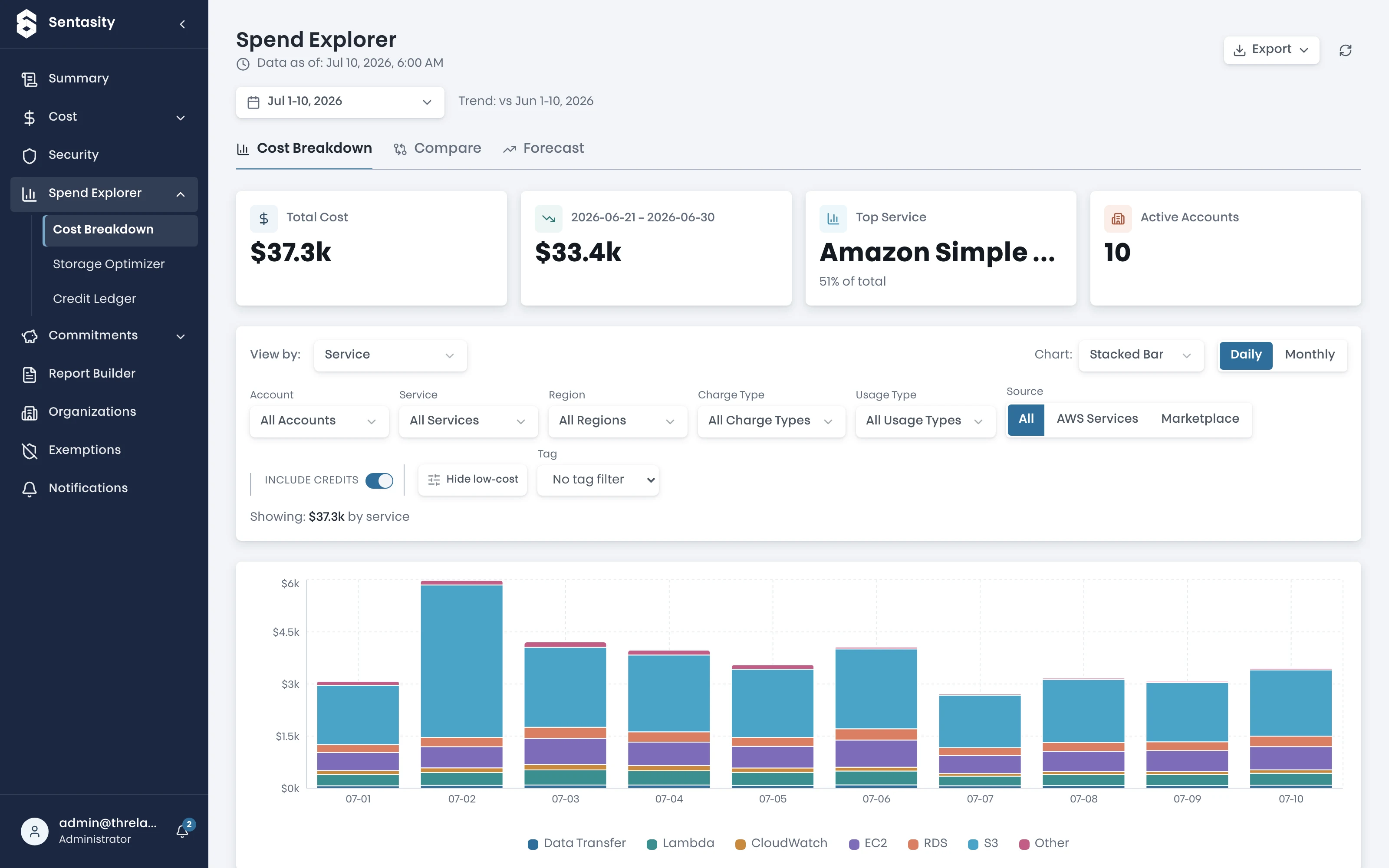
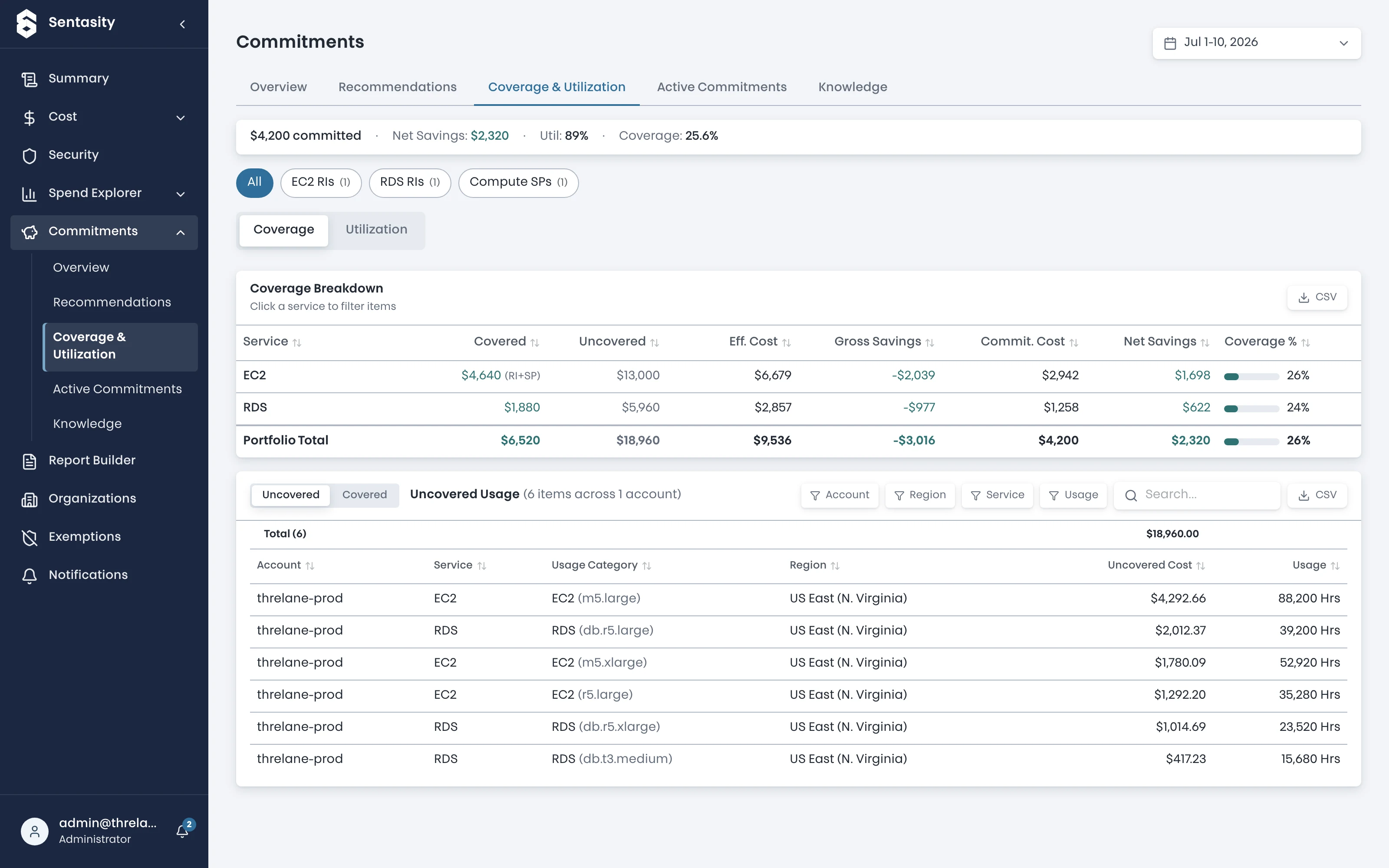
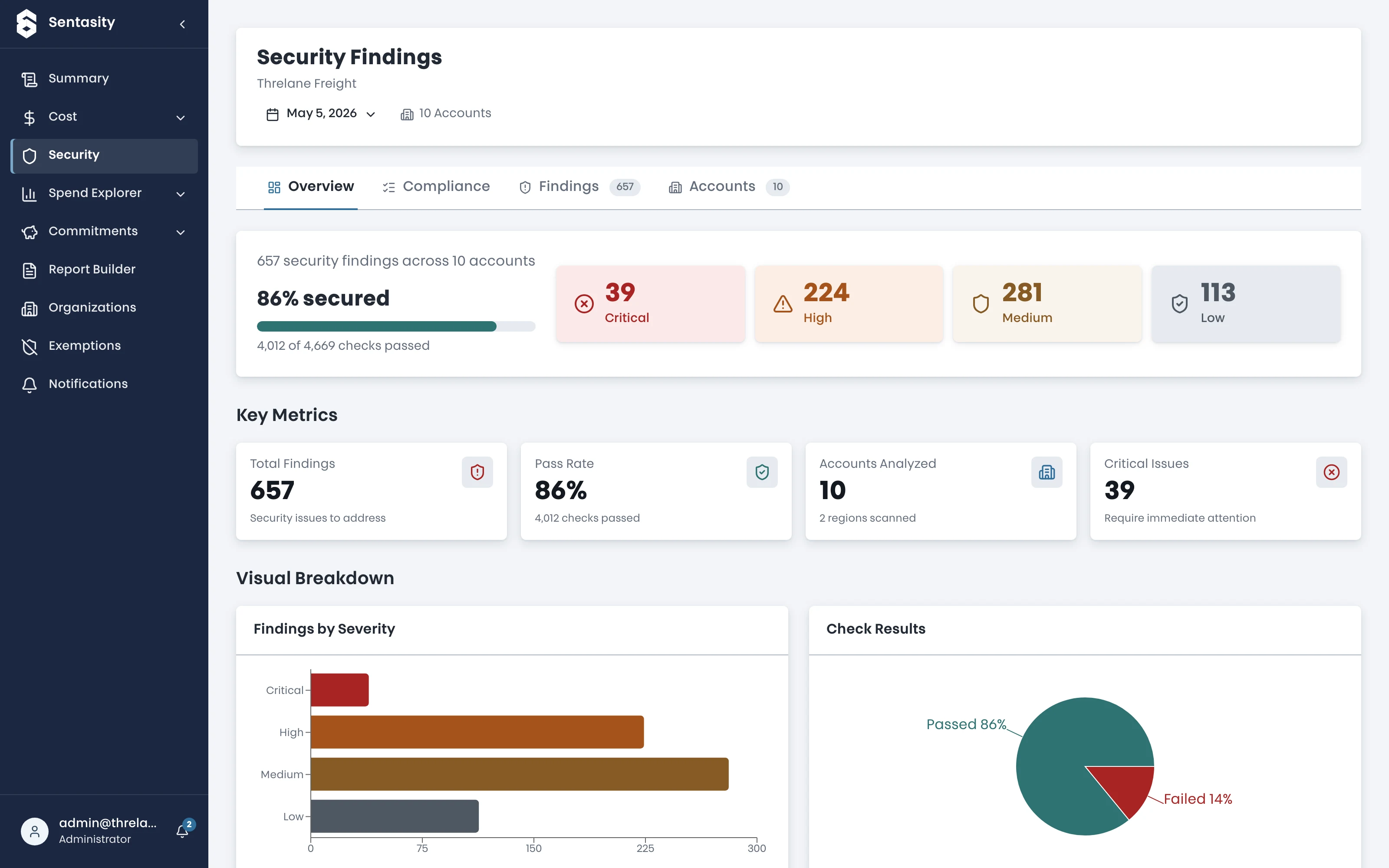
Behind it: a platform that keeps your AWS spend optimized by cutting what you don't use, sizing Reserved Instances and Savings Plans, and surfacing security risk, on every account, automatically.
“Why not just Cost Explorer?”
Fair question. Cost Explorer is great at service totals and the raw usage-type detail underneath. Sentasity adds a readable layer in between. Here's the same question answered in both.
One number per service. Click one: what's in it? That's the whole story.
what's IN it?
187,938
distinct usage-type codes in AWS's price list. We counted.
Filter to any one of them, if you already know its name.
Sentasity names all of them
EC2one quarter, real payer
$138,716
Categories, named types, and what changed. Every code has a home.
Published pricing. No quote wall.
Free where the bill is small, a flat cut of consumption after that.